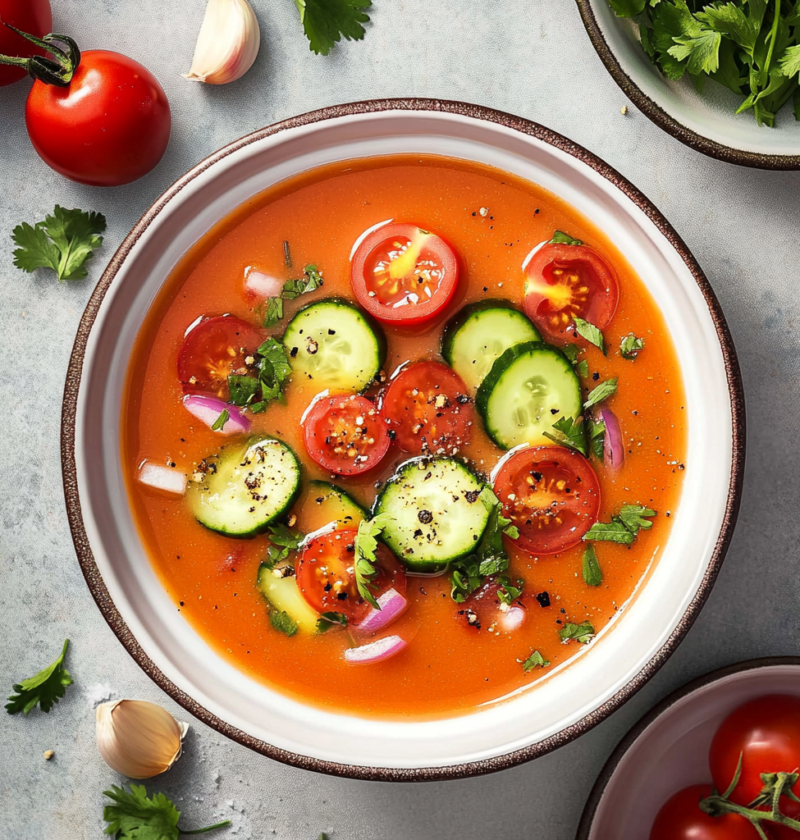
Gazpacho is a refreshing cold soup made from raw blended vegetables originating from the Andalusian region of Spain. This vibrant dish delivers a perfect balance of sweet tomatoes, crisp cucumber, and spicy chiles without any cooking required. It offers a hydrating and light meal that cools you down during the scorching heat of mid-summer while providing essential nutrients in every sip.
| Detail | Information |
|---|---|
| Prep Time | 20 minutes |
| Cook Time | 0 minutes |
| Total Time | 2 hours 20 minutes |
| Servings | 4 to 6 servings |
| Difficulty | Easy |
| Cuisine | Spanish |
| Category | Cold Soup |
| Method | Blending and Chilling |
Why This Recipe Works
This authentic gazpacho recipe succeeds by maximizing the natural sweetness of ripe tomatoes and the crisp crunch of fresh cucumber without applying heat. I have spent years refining the texture to ensure it is smooth yet substantial enough to satisfy hunger without feeling heavy. The key lies in using the highest quality produce, which eliminates the need for thickeners or stocks.
The balance of fat from the extra-virgin olive oil prevents the soup from separating and adds a velvety mouthfeel that makes each spoonful feel luxurious. Chilling the mixture allows the flavors to meld together, creating a complex, layered taste that improves over time rather than diminishing. Adding a small amount of vinegar brightens the entire profile and preserves the vibrant colors of the vegetables.
Chef Tips for Perfect Results
Mastering the texture and flavor balance is essential for a truly restaurant-quality experience at home. Follow these tips to ensure your soup is flawless every time you prepare it for family and friends.
- Select Ripe Seasonal Tomatoes: Choose tomatoes that are fragrant and slightly soft to the touch, as they contain higher sugar content and deeper flavor compounds than hard ones.
- Peel the Cucumbers: Removing the outer skin prevents bitter notes and creates a smoother, more cohesive consistency for the finished soup after blending.
- Control the Heat: Be cautious when using Fresno chiles as they can vary widely in spiciness depending on the harvest season.
- Emulsify the Oil: Blend the olive oil in at the very end of the process to create a creamy emulsion that keeps the soup from becoming too watery.
- Chill Thoroughly: Allow the soup to rest in the refrigerator for at least two hours to let the acidity mellow and flavors integrate fully.
- Adjust Seasoning Last: Salt and acid can change the flavor profile as the soup chills, so taste and adjust right before serving your guests.
- Strain for Smoothness: Pass the mixture through a fine-mesh sieve if you are seeking a refined texture free of any small vegetable bits.
- Cover When Chilling: Keep the soup tightly covered to prevent it from absorbing other odors in your refrigerator door.
Common Mistakes to Avoid
Avoiding these common pitfalls will help you maintain the crisp flavor and perfect texture of your cold soup.
| Mistake | Why It Happens | How to Fix It |
|---|---|---|
| Using Unripe Tomatoes | They lack natural sugars and create a bland flavor base | Wait for summer peak season for best flavor impact |
| Skipping the Vinegar | The soup tastes flat without enough acidity to balance sweetness | Add a splash of vinegar and taste frequently |
| Insufficient Chilling | Warm soup lacks the refreshing cooling quality of the dish | Refrigerate for a full two hours minimum before serving |
| Over-blending the Cucumber | Seeds release water and make the consistency too thin | Toss out seeds or add them back after straining |
| Under-seasoning Salt | Salt brings out the vegetable flavors and is essential | Add salt in stages while tasting frequently |
| Serving at Room Temp | The dish is traditionally served cold to refresh the palate | Keep chilled in the fridge until the last second |
Variations and Substitutions
You can easily modify this recipe to suit dietary preferences or taste without losing the core spirit of the dish.
| Ingredient or Element | Substitution or Variation | Impact on Flavor or Texture |
|---|---|---|
| Red Bell Pepper | Use instead of chile for mild flavor | Reduces heat and adds a sweeter profile |
| Green Bell Pepper | Use instead of bell pepper for spice | Adds a grassy note and slight bitterness |
| White Balsamic | Substitute for Sherry vinegar | Provides acidity without darkening the color |
| Water | Add if soup is too thick | Thins the texture but requires more seasoning |
| Sourdough Bread | Add to blender for thickening | Creates a heartier consistency like a stew |
| Canned Tomatoes | Use when fresh are unavailable | Makes soup less bright but still delicious |
| Avocado | Add for rich creaminess | Makes the soup thicker and heartier |
| Turkish Feta | Crumble on top for garnish | Introduces a salty punch to complement the sweet soup |
| Lime Juice | Replace red wine vinegar | Adds a tropical citrus kick to the finish |
Serving Suggestions and Pairings
Gazpacho serves best as a starter to whet the appetite before a larger meal or as a light lunch option.
- Crusty Spanish bread rubbed with garlic on the side adds a savory crunch.
- Serve with a side of olives to balance the acidity of the soup.
- Pair with grilled chicken or fish to complete a summer dinner.
- Offer a glass of crisp white wine alongside the cooler of soup.
- Top with diced avocado for richness and fiber content.
- Add hard-boiled eggs for extra protein and satiety.
- Serve alongside a simple green salad for a full meal.
- Pair with ceviche for a double seafood appetizer.
- Drink iced tea or water to complement the hydrating nature of the soup.
- Use tortilla chips instead of bread for gluten-free options.
- Top with diced ham alternatives or salami if meat is desired.
- Serve in a chilled bowl for maximum temperature retention.
A complete summer meal features this soup followed by a grilled vegetable platter and a light fruit dessert to round out the dining experience.
Make Ahead Options
This dish is ideal to prepare a day in advance and saves time on busy summer afternoons. The flavors develop better after resting in the fridge overnight, making it even more delicious than when freshly made.
You can blend the soup up to 24 hours before you plan to serve it, ensuring you have enough time for the cold to settle. If making further than one day ahead, add fresh herbs just before serving so they do not wilt from the acidity. Store the soup in a sealed container and give it a quick stir before ladling to redistribute the natural oil.
Storage and Reheating
Proper storage ensures your cold soup stays fresh and safe for consumption for several days.
| Method | Duration | Instructions |
|---|---|---|
| Room Temperature | 2 Hours | Serve immediately or discard if left longer due to safety risks |
| Refrigerator | Up to 4 Days | Keep in an airtight container in the coldest part of the fridge |
| Freezer | Not Recommended | Vegetables lose texture and water content upon freezing |
| Reheating | N/A | Do not heat this soup as it is intended to be served cold |
| Make Ahead | 24 Hours | Prepare the day before for the best flavor integration |
Nutritional Information
Approximate values are based on one serving and may vary depending on exact ingredients and portion size.
| Nutrient | Amount per Serving |
|---|---|
| Calories | 120 kcal |
| Protein | 2 g |
| Fat | 10 g |
| Saturated Fat | 1.5 g |
| Carbohydrates | 9 g |
| Fiber | 3 g |
| Sugar | 6 g |
| Sodium | 350 mg |
Frequently Asked Questions
Can I substitute other vegetables in the soup?
You can replace standard tomatoes with heirloom varieties for varied colors and flavors. Adding zucchini instead of cucumber offers a milder texture change to the final dish. It is important to maintain the core vegetable profile to keep the traditional Spanish character of the recipe.
How do I know when the tomatoes are ready for use?
Ripe tomatoes will give slightly when pressed and smell sweet at the stem. Their skin should be taut and shiny without any brown spots or blemishes. Avoid green tomatoes as they will not blend into a rich, savory consistency for the Gazpacho.
What should I do if the soup is too thick?
Add a splash of cold water or vegetable stock to reach the desired liquid consistency. Blend the additional liquid in for thirty seconds to ensure full integration. Do not add too much at once or you will dilute the fresh flavors.
Is it safe to make this recipe without any cooking?
Yes, making raw vegetable soups like this is safe when you wash all produce thoroughly with clean water. The blending does not require heat and remains safe as long as ingredients are fresh. Refrigeration limits bacterial growth significantly.
Can I add proteins to make it a full meal?
Yes, adding grilled shrimp or diced chicken makes this a complete protein-focused lunch option. Top with hard-boiled eggs or tofu cubes for vegan additions to the dish. The cold nature of the soup pairs well with chilled proteins.
How long does the soup last in the fridge?
The soup remains fresh and safe for up to four days after mixing in a sealed container. It is best enjoyed within the first two days for optimal crispness and flavor. Do not freeze the soup as the texture will be ruined.
Conclusion
This authentic Gazpacho soup offers a delightful culinary experience without the warmth of the kitchen, perfect for intense summer heat. The balanced profile of fresh tomatoes and spices ensures a vibrant taste that refreshes the palate instantly. You will love the simplicity of preparation and the health benefits found in every raw spoonful of this meal.
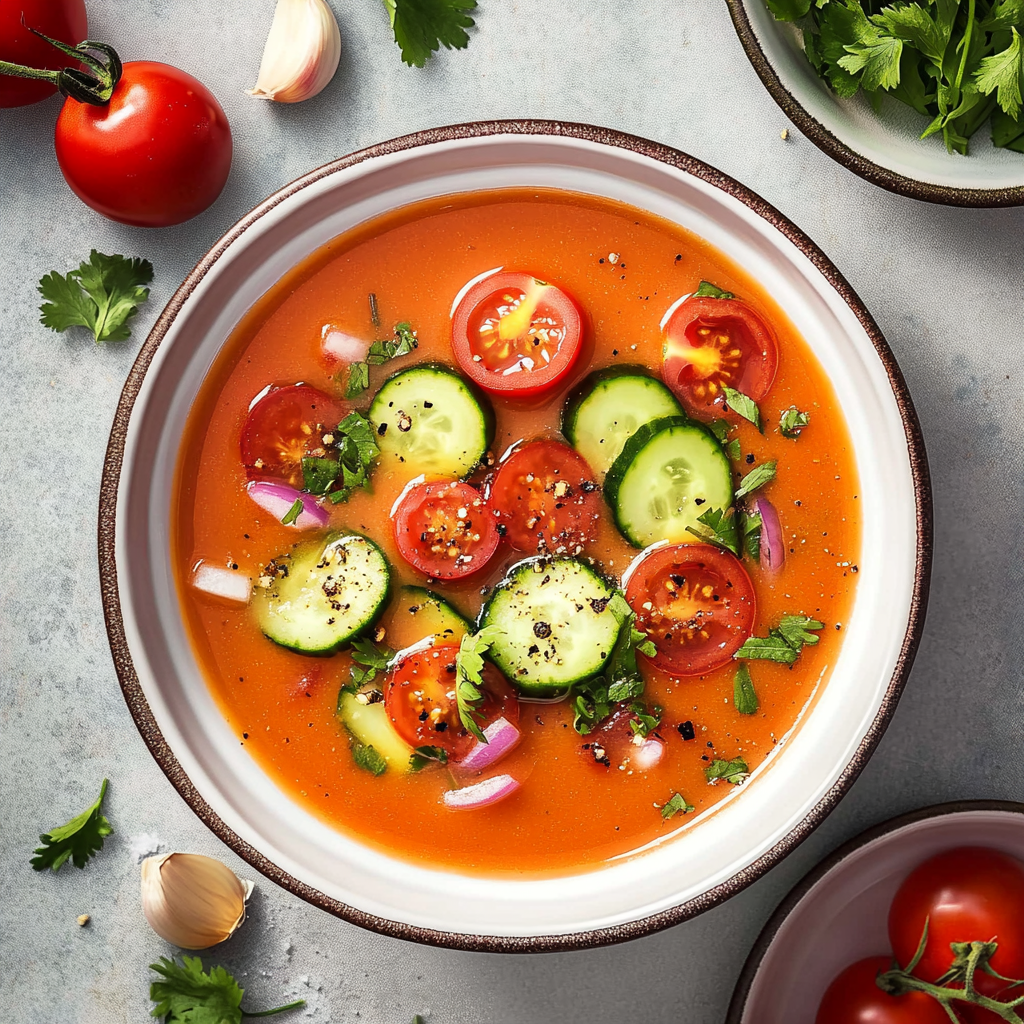
Authentic Gazpacho Soup Recipe for Hot Summer Days
Ingredients
Method
- Chop tomatoes, cucumber, chiles, and red onion into coarse pieces
- Place in blender with garlic, stale bread, and 2 Tbsp water
- Pulse until texture resembles wet sand
- Blend on high speed until fully smooth
- While blender runs, slowly add olive oil in a steady stream to emulsify
- Churn on high for 20-30 seconds
- Stir in vinegar and adjust seasoning
- Chill for at least 2 hours before serving
Nutrition
Notes
Peel cucumbers to avoid sponginess
Chill in air-tight container to protect oxidation
Puree in stages if using a standard blender
Top with fresh herbs, croutons, or diced fruits